
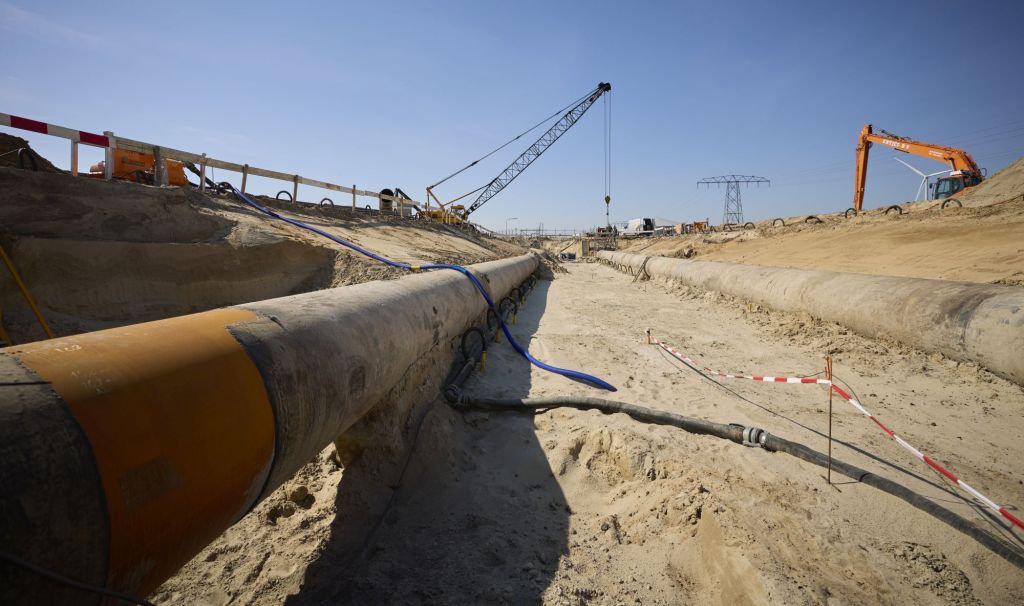
Converting the gas grid to H2
Introduction – Safely with Hydrogen
The adoption of hydrogen (H²) as a clean, zero-carbon renewable energy source promises a global revolution, eliminating harmful emissions responsible for climate change. This article explores one avenue and implications of the effects of hydrogen as an alternative to natural gas in the grid network. It also examines the safety risks and operational challenges posed when producing, handling, transporting, and storing alongside suggested best practices, safety measures, and detection technologies.
Converting the gas grid to hydrogen, is it really that simple?
Throughout Europe and US various interested parties plan to gradually convert the natural gas network into a hydrogen network. After all, having a sustainable energy system means that we must move away from natural gas as a fossil fuel. There expectation is that hydrogen will take its place.
- But is converting the natural gas grid to hydrogen economically and technically feasible?
- Does it deliver climate benefits?
- And first and foremost, is it safe?
Many respected and knowledgeable experts on H2 have grave doubts on most of the previous 3 points.
How safe is it to transport hydrogen by pipeline?
Some critics advise that hydrogen can have a disastrous effect on the steel used to make the pipelines. They fear that hydrogen atoms will easily be absorbed by the steel, causing pipelines to become brittle, resulting in cracks and leaks.
‘My own personal opinion is based on one simple rule: if it can’t be done safely, we don’t do it’.
Expert materials research engineers have been drafted to investigate the feasibility of reusing gas pipelines for hydrogen. To transport hydrogen safely, you must have a good understanding of the conditions under which that is possible because hydrogen’s adverse effect on steel is proven and well documented.
The toughness of the steel is reduced, and exposure to hydrogen can cause fatigue cracks to develop faster than when transporting natural gas.
Why is that? The hydrogen molecules (H2) themselves are not so much the problem. It’s mainly the hydrogen atoms (H) that cause the headaches. Hydrogen molecules are inherently stable when transported, they only break down into individual atoms in the presence of a catalyst. Iron is one of those catalysts. Steel natural gas pipelines are protected on the inside by a layer of oxide, but if that layer is degraded by welding faults, for example, exposing a clean iron surface, hydrogen molecules can decay into hydrogen atoms at that point, penetrating the steel.
The ’initial defect’ then grows as the hydrogen atoms penetrate further into the material. This is called ‘crack initiation’. Hydrogen can cause cracks to grow an estimated twenty to fifty times faster than other gases. This happens particularly when there are large pressure changes in the pipeline. Without additional measures, this embrittlement effect could lead to ‘minor leaks’ in the longer term.
Can leaks be prevented?
Leaks are obviously undesirable; they can lead to dangerous situations because hydrogen is highly flammable. Leaks are also a form of product loss. Every cubic meter of hydrogen that leaks out can no longer be sold. Furthermore, leaks lead to climate damage because more hydrogen in the atmosphere would slow the breakdown of the greenhouse gas methane.
How safe is it to transport hydrogen by pipeline if leaks can occur? For safety reasons, certification bodies should assume an ignition probability of 100% in the event of a hydrogen leak. Though, this is not the case in practice: the ignition probability for natural gas is calculated at 40 to 80%, depending on the pipeline diameter and pressure. Hydrogen is highly flammable, it is also highly volatile, meaning it evaporates very quickly at normal temperatures.
Besides normal combustion, hydrogen can also burn at an accelerated rate, resulting in a rapid build-up of pressure i.e. an explosion. Hydrogen can explode under certain conditions when its concentration in air is at least 10%. However, because hydrogen is so light and volatile, that 10% threshold is not easily reached. ‘If a hydrogen pipeline in an open field develops a leak, you won’t reach that threshold because of the lightness and volatility of hydrogen’.
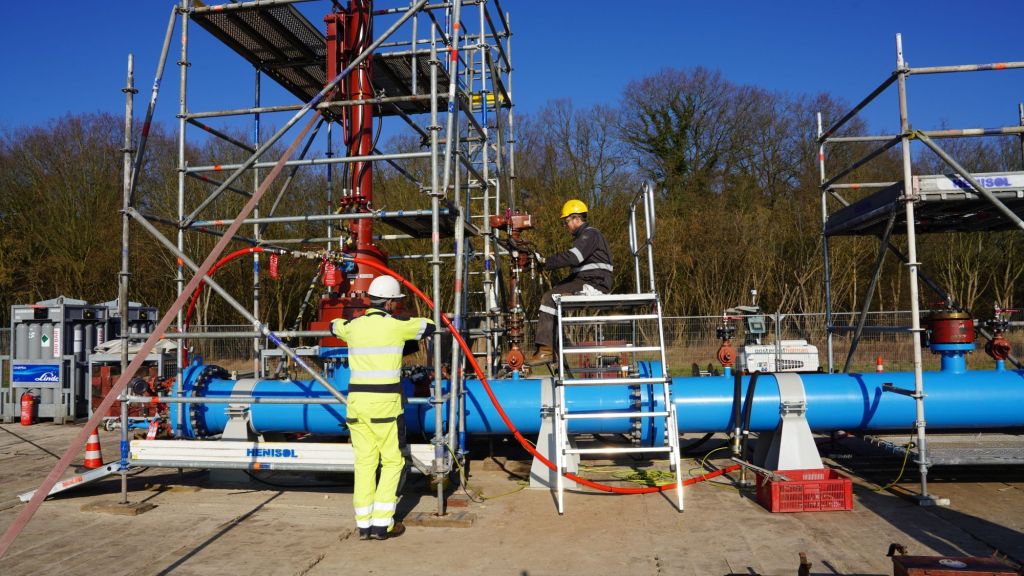
Even though the explosion hazard is limited, it is still considered prudent to plan to prevent leaks. So, once a crack develops, action is needed to slow down the effect of accelerated crack growth. To achieve that, recommendations indicate a crack may grow by no more than 0.25 mm over an operating period of 100 years.
Pressure changes in the pipeline determine the growth rate of cracks. Precise calculations can determine what the maximum pressure changes in the hydrogen network may be and how often they may occur.
In the case of natural gas, we mainly control pressure based on customer demand, and when the pressure in the pipeline network fluctuates, it is easily controlled. In the case of hydrogen, it is far more important to control pressure changes in the network due to the reactive nature of Hydrogen on metals. Large salt caverns will store hydrogen to keep the pressure within a limited range. These act like an expansion vessel in a domestic central heating system, allowing us to accommodate pressure changes in the system.
Further growth of the hydrogen grid can also help. In a nationwide hydrogen network of many hundreds of miles, you need a lot of hydrogen to increase pressure by even as little as 0.1 bar.
The greater the network, the smaller the pressure fluctuations.’
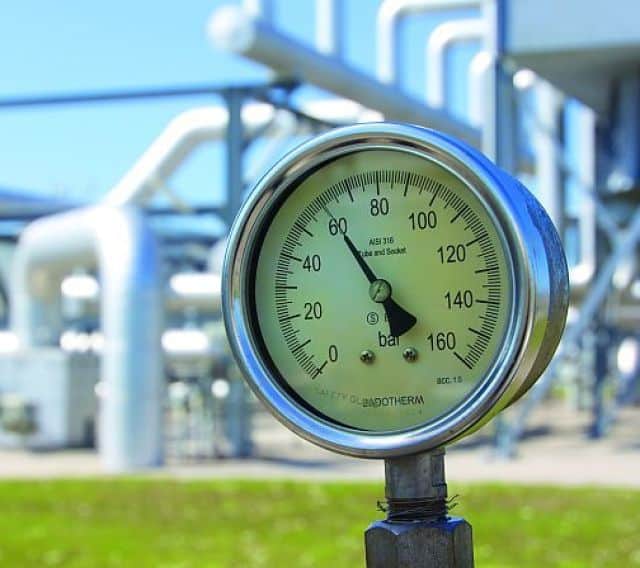
During the first few years of operation of the hydrogen grid, supply and demand will sometimes be insufficiently balanced. The caverns may not be ready for storage during that period hence, pressure changes may well occur. The operating pressure in pipelines can fluctuate between 30 and 50 bar and tend to stabilise in practice at around 40 bar. That is lower than the design pressure of 66 bar.’
The expectation is that when volumes or capacities increase in the future, you simply add a second pipeline instead of using large and expensive compressor stations. Evidence exists from network experts claiming there may not be a need to build hydrogen network compressor stations before 2035.
Given the limited experience with hydrogen transmission through pipelines, numerous research groups are conducting tests to confirm if the view on H2 network compressor station requirements meet the views of most experts in this field.
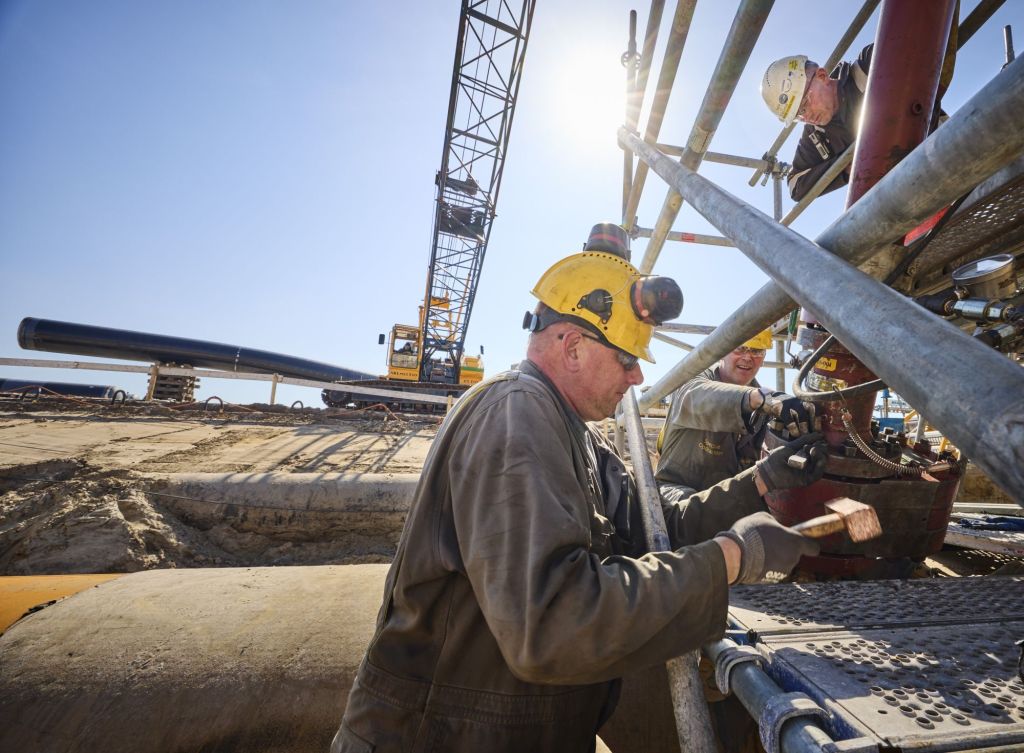
Are the branch lines and valves in the network safe?
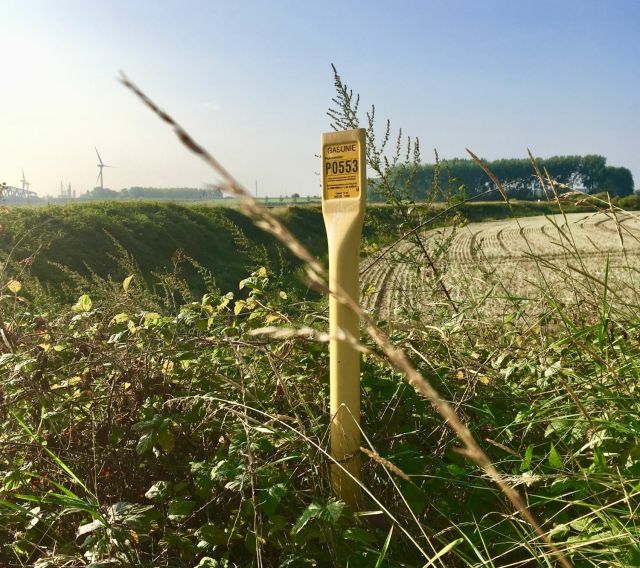
When the natural gas network is converted to a hydrogen grid, only the pipelines themselves will be left in place. Everything else will be replaced. This mainly involves the valves. These are the points in the network where, for example, branch lines are installed to connect customers.
A valve is like a tap in the water supply. In a natural gas pipeline, it is a sort of ball with a hole in it. Turning the ball, a quarter turn allows gas to flow through the valve; turning it another quarter turn stops the flow of gas. The current gas grid information estimates a valve every 15 miles. This approach is to mitigate and limit nuisance to local communities in the event of a major leak.’
With natural gas, it takes approximately an hour to empty a 15-mile length of pipe. Because hydrogen is much more volatile, a pipeline length of 50 or maybe 80 miles would empty in an hour hence the need for fewer valves. There are moving parts in valves, which are associated with a greater risk of leakage than the steel pipe.’
What if something does happen?
Before pipelines are put into service, they are inspected internally. There are all kinds of tools for this. For example, there is a tool that can detect cracks and other defects by generating a resonant vibration in the steel.
In emergencies, the valves close. Although 100% pure hydrogen burns with a colourless flame, there are always small amounts of contaminant in the gas, as well as in the air drawn in that is needed for combustion, which make the flame visible. Technicians and inspectors have all kinds of equipment to locate damage and leaks. Certified equipment such as IR Flame Detectors, Acoustic Leak Detectors, and Fixed Gas Detectors can connect to control systems that take action to prevent or warn of dangerous situations involving flammable or explosive substances.
Is repurposing a natural gas pipeline for hydrogen economically feasible?
Because existing pipelines must be made suitable for transporting hydrogen, some fear that the conversion, while technically possible, will be far too expensive. Supporters and advisors of Hydrogen gas pipeline networks advise that this point has also been given extensive consideration. When developing hydrogen infrastructure in the Europe, joint studies looked closely at this aspect. It is their opinion that repurposing an existing pipeline cost just 20% of building a new gas pipeline. Other contractors with a ‘dog in the race’ have calculated that the cost of repurposing can be four times lower than a new construction.’
Will it really deliver climate benefits?
In the United States and European countries with a limited natural gas network, the strategy focuses on blending hydrogen with natural gas. A blend of 80% natural gas and 20% green hydrogen leads to a reduction in carbon emissions of only 7% because of hydrogen’s lower energy density.
Therefore, why would you invest so much money in the network when the climate benefits are so limited, critics ask. Although hydrogen blending may be a first phase in many cases, the strategy of many gas transmission companies is to eventually transport (almost) 100% hydrogen. The reduction in emissions is then correspondingly greater.
Is it possible?
Back to the headline at the top of this article: ‘Converting the gas grid to hydrogen, is it really that simple?’ The answer is: yes, it can be done, but it’s not that simple. As the level of demand for hydrogen from industry, the chemicals sector and transport sector increases, infrastructure will be needed to get it to the customers.
So, it’s not that simple. However, with the right investments and precautions, pro H2 advisors consider transporting hydrogen through natural gas pipelines to be safe and economical and able to deliver climate benefits.
Hydrogen and embrittlement
Hydrogen atoms can cause existing crack-like defects in welded joints to grow faster under pressure variations than natural gas. This is a form of hydrogen embrittlement. The likelihood of such defects is very low. This is because the pipelines have been thoroughly examined both at the plant and in the field, under the oversight of an independent inspection.
Ventilation prevents hydrogen accumulation
Hydrogen molecules are lighter than methane molecules (methane is the main component of natural gas) so it rises faster. This is a positive quality in case of leaks. The risk of a flammable or explosive mixture is lower than with natural gas. However, the ignition energy is much lower with a flammable hydrogen-air mixture.
Ventilation is important because hydrogen, like natural gas, can accumulate in confined spaces. This can lead to fire or explosions. Safety designs will ensure that leaks with hydrogen occur as little as possible, just as with natural gas.
Preventing leaks is better for the climate
Hydrogen itself has no direct effect on global warming because the hydrogen molecule cannot absorb infrared radiation. The methane molecule can absorb infrared radiation, which is why it is called a greenhouse gas. In theory, hydrogen can slow down the breakdown of methane in the atmosphere, causing the methane to stay in the atmosphere longer and retain heat longer.
Conclusion
Various Webinars run on an almost daily basis with some of the most knowledgeable experts and companies offering their tuppence worth of advice as to the future of Hydrogen and how best to deploy it’s use when considering energy needs, environmental needs, costs and many other contentious arguments for and against Hydrogen as an energy source.
Only time, and success or otherwise will determine how future energy will be evaluated when the time to look back on the road maps each nation takes on the great H2 journey.